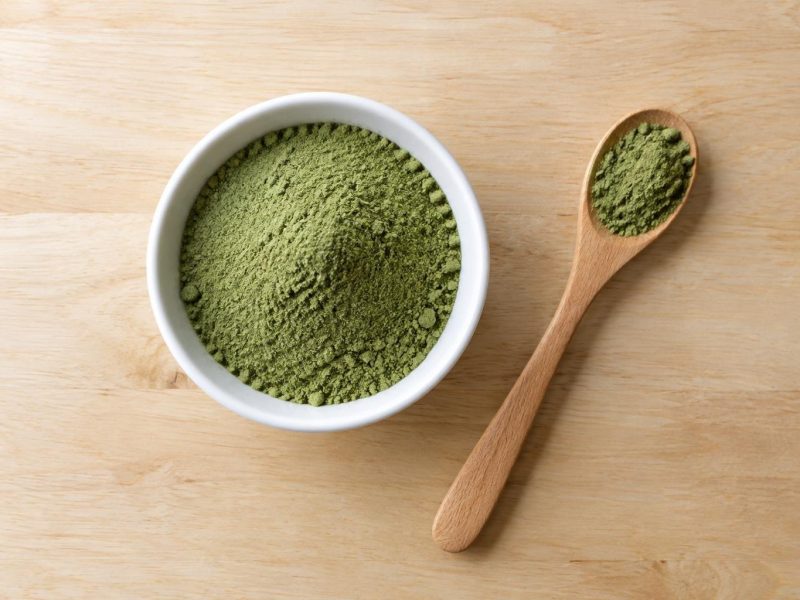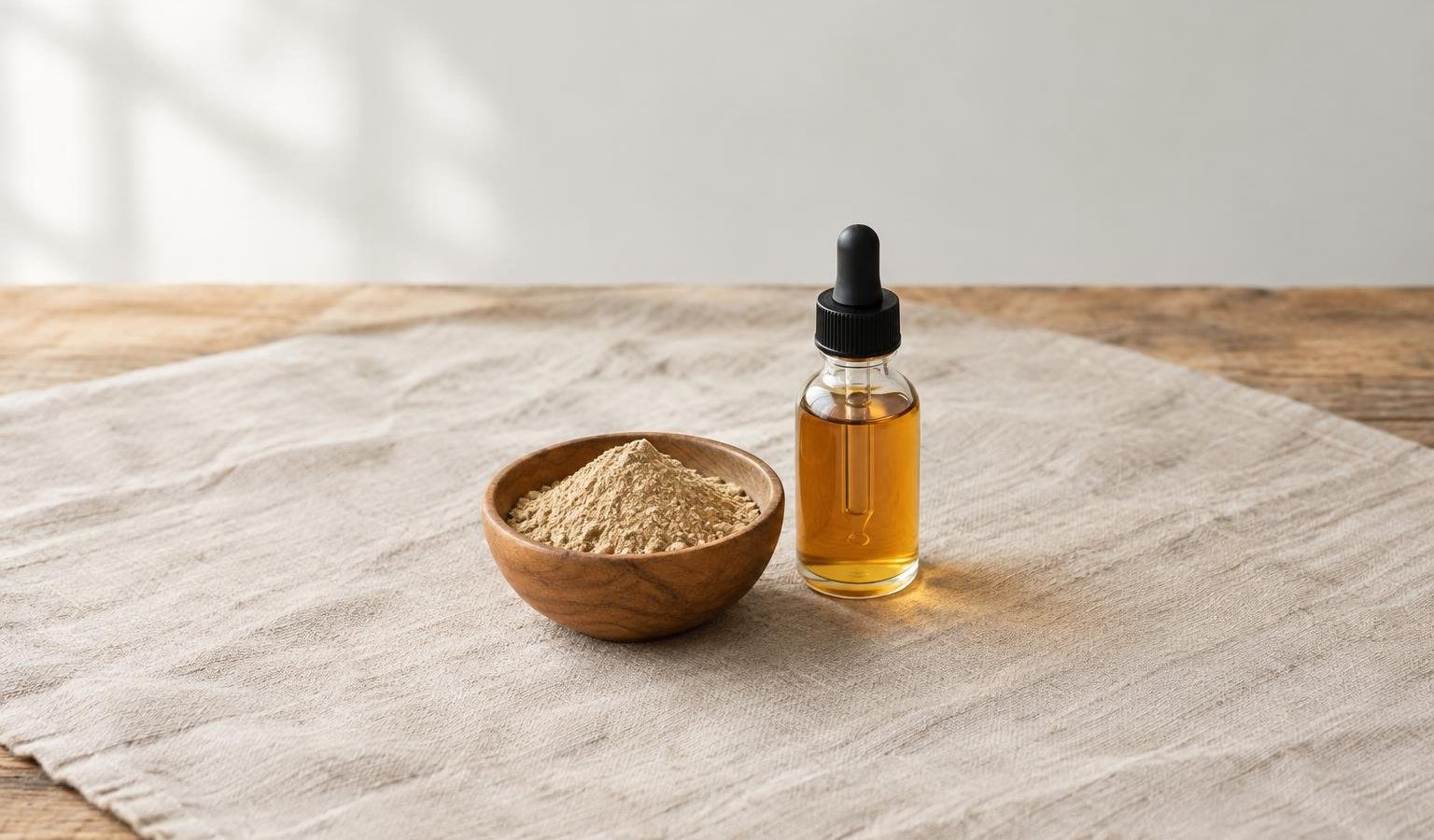
Ashwagandha root powder is the dried, ground root, while an extract is a concentrated preparation made from the root (or sometimes the leaf), so the two are not the same product. In the ashwagandha root vs extract question, the main differences are how the product is made and how its label describes it. Both forms are supplements, and the safety cautions covered below apply to ashwagandha supplements in general.
What Is Ashwagandha, and Which Forms Are Sold?
Ashwagandha (Withania somnifera) is an evergreen shrub found in parts of India, Africa and the Middle East. It has been used as a medicinal plant for thousands of years, especially in traditional Ayurvedic medicine (NCCIH). That is traditional use, which is different from proof that it works for a given purpose.
Today, ashwagandha supplements typically contain root, leaf, or root/leaf extracts. Herbal supplements in general are sold as teas, extracts, tablets, capsules, powders and other forms (NCCIH). If you also want to compare plant parts, see our guide to ashwagandha root vs leaf labels and evidence.
How Root Powder and Extract Are Made
Root powder
Root powder is the simplest form. The root is dried and ground into a fine, beige powder. Nothing is separated out, so the powder contains the whole root material. It usually has an earthy, slightly bitter taste, and it is sold loose or packed into capsules.
Extract
An extract starts with the same plant material, but the maker soaks it in a liquid such as water or alcohol to draw out some of its compounds. The liquid is then concentrated or dried. The result may be a powder, a liquid in a dropper bottle, or an ingredient inside capsules or tablets. Because the process pulls out some compounds more than others, an extract may have a different mix of compounds than the root powder. It is not simply a stronger version of the same material.
One practical point is worth knowing. Supplements are stronger than the herbs people use in cooking, so it is wise to talk with a healthcare provider before taking supplements or higher amounts (Memorial Sloan Kettering). For a look at the tea format, see ashwagandha tea taste, preparation and safety facts.
How to Read the Label: Standardized, Ratio and Withanolides
Labels use a few terms that can look technical. Here is what they generally mean.
Withanolides
Withanolides are a group of bioactive compounds found in ashwagandha and have been associated with anti-inflammatory and antioxidant effects (NCCIH). Other compounds in the plant include alkaloids, steroidal lactones and saponins (Memorial Sloan Kettering). A label that lists withanolides is pointing to one of these compound groups.
Standardized
“Standardized” generally means the maker aims for a set percentage of a named compound, often withanolides, in each batch. It is a statement about consistency in the product. It does not tell you whether the product is safe, and it does not mean the product has been proven to work.
Ratio
A ratio such as “10:1” generally describes how much raw plant material was used to make a given amount of extract. It says little about how much of any specific compound is inside. Two extracts with the same ratio can differ in withanolide content, and a ratio extract is not necessarily standardized.
What labels cannot promise
Supplement labels cannot claim to diagnose, treat, cure, mitigate or prevent any disease (NCCIH). Claims about the structure or function of the body can appear, but they must carry a disclaimer that the statement has not been evaluated by the FDA. In the U.S., supplements are not approved by the FDA before they are sold, and manufacturers are responsible for the safety and accurate labeling of their products. What is on the label may also not be exactly what is in the product, which is a reason to be careful with any supplement.
If you are comparing formats, our guide to choosing ashwagandha gummies covers one more way these ingredients show up on shelves.
What Research Does and Does Not Cover
Many clinical trials have looked at ashwagandha for a range of health conditions. However, many of these studies had small sample sizes and used a variety of ashwagandha preparations (NCCIH). That makes it hard to say whether results from one product apply to another, including root powder versus extract.
Here is what the research suggests so far:
- Some studies suggest certain ashwagandha preparations may help with insomnia and stress, but evidence on anxiety is unclear.
- Limited evidence suggests that ashwagandha may increase testosterone levels and sperm quality.
- There is not enough evidence to say whether it helps with asthma, athletic performance, cognitive function, diabetes, menopause or female infertility.
- There is not enough high-quality evidence to support its use for COVID-19.
Some other work is done in the lab or in animals. Some lab studies show that ashwagandha can slow the growth of cancer cells, but this effect has not been observed in humans (Memorial Sloan Kettering). Results from cells or animals do not necessarily show what happens in people.
Supplements sold in stores or online may also differ in important ways from the products tested in studies (NCCIH). A trial using one specific extract does not automatically apply to a different extract or to root powder.
Safety, Side Effects and Interactions
Ashwagandha may be safe when taken in the short term, but there is not enough information to draw conclusions about long-term safety (NCCIH). Some people have drowsiness, stomach upset, diarrhea and vomiting. Liver injury linked to ashwagandha supplements is rare, but a number of cases have been reported.
Reported side effects
Reported effects include nausea, headache, drowsiness, stomach irritation and loose stools. Case reports have also linked ashwagandha supplements to thyroid overactivity (thyrotoxicosis) and liver injury. In the thyroid cases, symptoms resolved after the supplement was stopped. In the liver cases, symptoms improved after stopping, and some patients needed additional treatment. One report described hemolytic anemia and abdominal pain after people took ashwagandha/mucuna pills that contained high amounts of lead (Memorial Sloan Kettering). What is on a supplement label may not be what is in the product, and this applies to both root powder and extracts (NCCIH).
Who should avoid it
- Pregnancy: ashwagandha should be avoided during pregnancy, as it may increase the risk of miscarriage.
- Breastfeeding: it should not be used while breastfeeding.
- Surgery, autoimmune or thyroid disorders: it is not recommended for people about to have surgery or for those with autoimmune or thyroid disorders.
- Hormone-sensitive prostate cancer: because ashwagandha may increase testosterone levels, people with this condition should avoid it.
Many supplements have not been tested in pregnant women, nursing mothers or children, so safety data for these groups is limited.
Possible medication interactions
Ashwagandha might interact with medicines for diabetes and high blood pressure, immunosuppressants, sedatives, anti-seizure medications and thyroid hormone medications. It may also add to the drowsiness caused by some prescription medicines, and people who take benzodiazepines, anticonvulsants or barbiturates should likely avoid it.
Follow the directions on the product label, and talk with a doctor or pharmacist before use, especially if you have a medical condition or take any medication.
Frequently Asked Questions
What is the difference between ashwagandha root and ashwagandha extract?
Root is the dried, ground plant part, while an extract is a concentrated preparation made by drawing compounds out of the root or leaf with a liquid.
Because extraction can concentrate some compounds more than others, the two forms can differ in makeup. Studies have used many different preparations, so results for one form may not apply to another (NCCIH). Safety data comparing the two forms is limited. Follow the product label and ask a doctor or pharmacist.
Is ashwagandha extract the same as ashwagandha root powder?
No. Root powder is the ground whole root, while an extract is processed to concentrate certain compounds, so the two are different products.
Supplements typically contain root, leaf, or root/leaf extracts, so check which plant part and form a product uses. The safety cautions listed above, including those for pregnancy, breastfeeding, thyroid and autoimmune conditions, and medication interactions, apply to ashwagandha supplements in general. If you take medicines or have a health condition, ask a doctor or pharmacist before use.
What does standardized extract mean on an ashwagandha label?
It generally means the maker aims for a set level of a named compound, often withanolides, in each batch of the extract.
This describes consistency, not proof of safety or benefit. Withanolides are one group of compounds in the plant, and a percentage on a label does not show how a product will affect any one person. Supplements are not approved by the FDA before they are sold, and what is on the label may not be exactly what is in the product (NCCIH).
Bottom Line
Root powder and extract are different forms of the same plant, and the label terms (standardized, ratio, withanolides) describe how a product is made, not whether it is safe or effective. Research on ashwagandha is mixed and often uses small studies with varied preparations, so the evidence does not clearly show that one form is better. Safety cautions apply to ashwagandha supplements in general, especially in pregnancy, breastfeeding, thyroid or autoimmune conditions, and when taking certain medications. Talk with a doctor or pharmacist before use, and follow the product label.