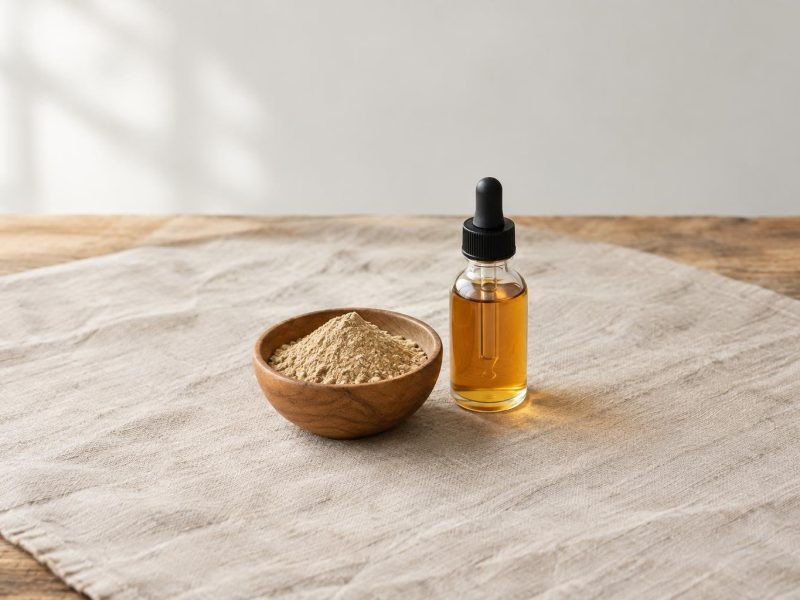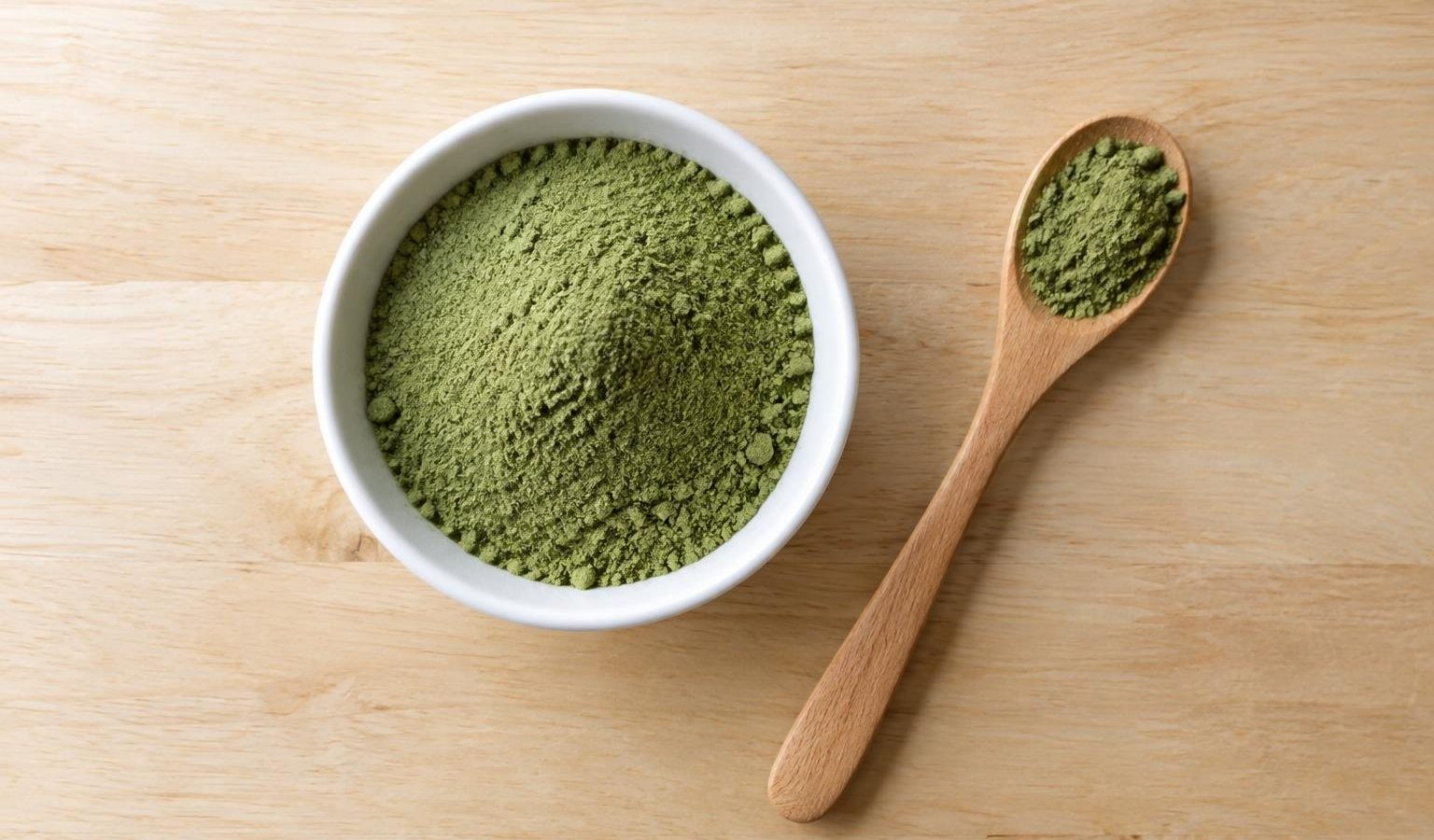
Moringa leaf powder is a fine green powder made from the dried, ground leaves of Moringa oleifera, a plant native to several Asian nations (PubMed). It is sold as a food ingredient and a supplement. The plant has a history of traditional use, but research in people is still limited, and no safe amount has been established.
What Is Moringa Leaf Powder?
Moringa oleifera is a fast-growing tree. The leaves are picked, dried and ground into a powder. The powder tastes earthy and grassy, sometimes a little bitter, so people often mix it into foods and drinks rather than eat it plain.
Labels vary. Some products contain only leaf powder. Others blend it with fruit powders, flavorings or other herbs. Checking the ingredient list tells you which plant part is used and whether anything else is added. If you want to see how plant-part labeling works with another herb, our guide to ashwagandha root versus leaf labels is a useful comparison.
Traditional Use vs. Scientific Evidence
What traditional use means
People in the regions where the plant grows have used moringa for a variety of conditions. This use was based on experience over time rather than on controlled trials. Traditional use is a reason for scientists to study a plant. It is not proof that the plant works or is safe.
What modern research has looked at
Researchers have studied moringa in lab and animal work and in some human studies. A review of 146 papers on metabolic syndrome-related conditions reported positive effects on blood glucose, blood pressure, blood fats and obesity. The authors also said further human studies are needed before anyone can say whether moringa helps with metabolic syndrome (PubMed). In plain terms, the findings are promising but not settled.
Another review looked at moringa and ginger in relation to chronic low-grade inflammation linked to aging. It described reduced inflammatory signals and higher activity of antioxidant enzymes in the studies it covered (PubMed). These are changes in biological markers. They do not show that moringa prevents or treats any disease, and a review that combines moringa and ginger cannot tell us what moringa leaf powder does on its own.
The reviews above do not separate out studies of the leaf powder eaten as food. Findings from lab studies of extracts may not apply to a spoonful of powder in a smoothie.
Nutrient Profile: What to Look for on the Label
Exact nutrient amounts in moringa leaf powder differ from product to product. They depend on the leaves, how they were dried and whether anything was added. The nutrition facts panel on your product is a better guide than any general claim. Here is some context on nutrients people often look for in green powders.
Plant compounds
Moringa oleifera is named among the plant sources of polyphenols, a class of bioactive compounds that also occur in foods such as citrus fruits, berries, onions, spinach and green tea (PubMed). A plant containing such compounds does not mean a powder will have a health effect in people. It shows only that the plant is chemically interesting to researchers.
Iron and vitamin C
People often use green powders hoping to get more iron. Iron from vegetables, fruits, grains and supplements is harder for the body to absorb (MedlinePlus). Vitamin C helps the body absorb the type of iron found in plant foods such as leafy greens, and it can be reduced by heat and light (Harvard T.H. Chan School of Public Health). So even if a label lists these nutrients, what your body actually uses may differ.
Iron deficiency anemia is usually checked with a blood test, and treatment is decided with a doctor. Symptoms such as tiredness, shortness of breath and pale skin are good reasons to see a doctor, not to self-treat with a powder (NHS).
How People Use the Powder in the Kitchen
Moringa leaf powder is usually stirred into foods and drinks. Common ways include blending it into a smoothie, whisking it into a warm drink, or mixing it into soup, dips or batter. Its strong flavor is easier to handle when paired with other ingredients. If you like blended drinks, our sea moss smoothie ideas show how powders and other ingredients are combined.
No safe amount of moringa leaf powder has been established, so follow the product label and ask a doctor or pharmacist how much, if any, suits you. Store the powder in a sealed container in a cool, dry place away from direct light, and check the label for any storage directions.
Safety, Side Effects and Interactions
Safety data for moringa leaf powder is limited. Because of that, a reliable list of side effects, drug interactions or a safe amount cannot be given. Product quality and ingredients can vary between brands, so reading the label matters. Our guide to reading supplement labels and safety notes covers general label-checking habits that apply here too.
Who should check with a doctor first
- Pregnancy and breastfeeding: Safety data is limited. Ask your health care provider before using it.
- Children: Safety data is limited, so ask a pediatrician before giving any herbal powder to a child.
- People taking medicines for blood sugar or blood pressure: Research has looked at moringa’s effects on blood glucose and blood pressure (PubMed). It is not clear how it might interact with these medicines, so ask your doctor or pharmacist.
- People with chronic conditions or a planned procedure: Mention any supplement to your care team.
- People with hemochromatosis: This genetic condition causes too much iron to build up, and treatment includes avoiding iron supplements (MedlinePlus). If a powder’s label lists iron, talk to your doctor first.
Keep iron-containing products away from children
An iron overdose in a young child can be fatal (NHS). Store any supplement that contains iron out of children’s reach. If you think a child has swallowed any iron-containing product, contact a doctor or emergency services straight away.
Frequently Asked Questions
Is moringa leaf powder a proven treatment for diabetes or high blood pressure?
No. A review reports promising effects on blood glucose and blood pressure, but the authors say more human research is needed (PubMed). Do not use the powder in place of prescribed medicine.
Can it replace iron tablets or iron-rich foods?
No. Moringa leaf powder should not be used in place of iron tablets. If you may have low iron, a blood test is the first step, and a doctor decides on treatment (NHS).
What does it taste like?
Most people describe it as earthy, grassy and slightly bitter. Mixing it with other flavors in a drink or recipe makes it milder.
Is it safe for everyone?
Safety data is limited, and no safe amount has been established. Pregnant or breastfeeding people, children, and anyone with a medical condition or taking medicines should ask a doctor or pharmacist first.
Bottom Line
Moringa leaf powder comes from a plant with a history of traditional use, and early research is interesting. But much of the evidence comes from lab work and reviews that call for more human studies, so it cannot be called a treatment for any condition. Read the label, check the nutrition facts instead of relying on claims, and talk to a doctor or pharmacist before using it, especially if you take medicines, are pregnant or breastfeeding, or have a chronic condition. If you want an educational look at another herb with a similar tradition-versus-evidence story, see black seed oil traditional uses versus evidence.
Sources
- PubMed: Promising Influences of Moringa oleifera in Functional Foods against Metabolic Syndrome: A Comprehensive and Mechanistic Review
- PubMed: Suppression of Inflamm-Aging by Moringa oleifera and Zingiber officinale Roscoe in the Prevention of Degenerative Diseases
- PubMed: Bioactive Compounds Effective Against Type 2 Diabetes Mellitus: A Systematic Review
- MedlinePlus: Iron in diet
- Harvard T.H. Chan School of Public Health: Vitamin C, The Nutrition Source
- NHS: Iron deficiency anaemia