Learning how to mix ashwagandha powder into drinks is simple: stir the powder with a small splash of liquid into a smooth paste first, then whisk or blend that paste into warm tea, warm milk or a smoothie. The powder does not fully dissolve, so a paste, a whisk or a blender helps keep it from floating in clumps. A safety section follows the method.
Know Your Powder First
Ashwagandha (Withania somnifera) is an evergreen shrub that has been used for thousands of years in traditional Ayurvedic medicine. Today, ashwagandha products are often promoted for stress and sleep, and they typically contain root, leaf, or root and leaf extracts. Many clinical trials have been small and have used different preparations, so results are hard to compare (NCCIH). Research on ashwagandha powder stirred into drinks specifically is limited. Tradition and marketing are not the same as proof.
The part of the plant matters for taste and labeling. Our guides on ashwagandha root versus leaf and root versus extract explain what to look for on a label. In the U.S., dietary supplements are not approved by the FDA before they are sold, and manufacturers are responsible for the safety and labeling of their products. Read the label carefully wherever you live.
The Paste-First Method That Prevents Clumps
Ashwagandha powder is fine and slightly dry. When it lands on a hot or cold liquid, the outside of each pinch can get wet while the inside stays dry, which forms little lumps. These steps help:
- Start with a dry, empty mug. Add the powder in the amount listed on your product label. If you are unsure how much to use, ask a doctor or pharmacist.
- Add only a splash of liquid. Use a small amount of warm tea or milk. Press the powder against the side of the mug with the back of a spoon.
- Stir into a smooth paste. It should look like thin mud with no dry spots.
- Pour in the rest slowly while whisking. A small whisk or handheld milk frother works better than a spoon.
- Strain if you like. A fine tea strainer catches any stubborn bits.
Sifting the powder through a small sieve before you start also breaks up lumps. Expect a little sediment at the bottom of the cup, because the powder stays suspended rather than dissolved. Give the drink a stir before the last sips.
Tea, Warm Milk and Smoothies: Three Ways to Mix It
In tea
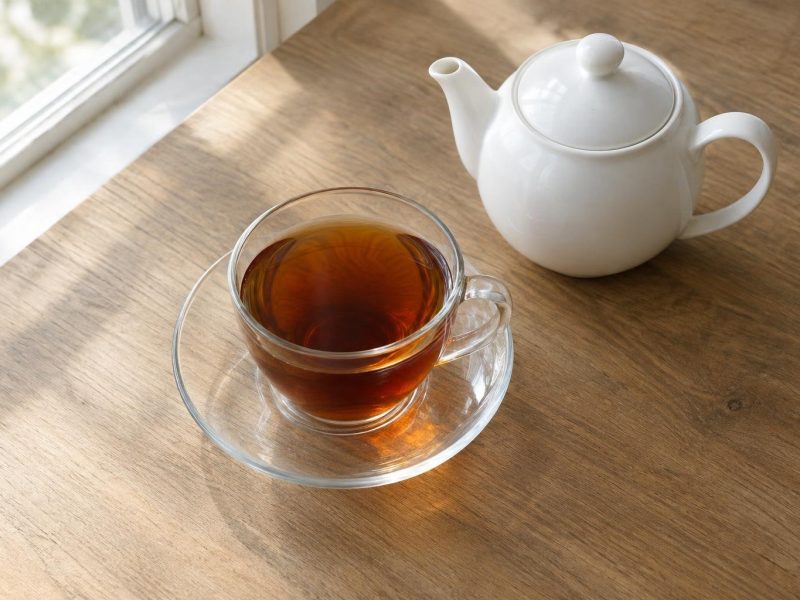
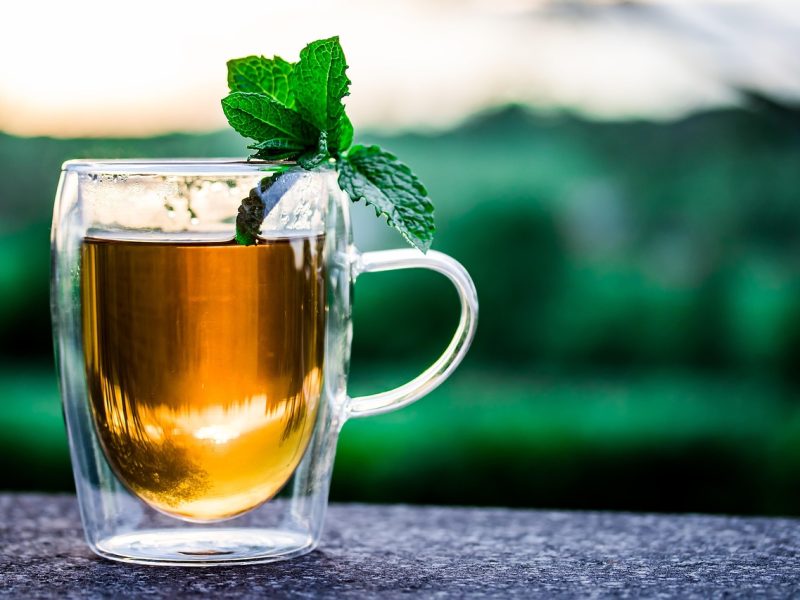
Brew your tea as usual and let it cool slightly so it is hot but not boiling. Spoon a little into the mug with the powder, make the paste, then top up with the rest. Ashwagandha has a bitter, earthy flavor, so tea styles with some natural sweetness, such as a spiced or lightly sweetened blend, tend to blend with it better. A slice of lemon or a little honey can also soften it. If you want a tea made from the root itself, see our ashwagandha tea guide.
Check what is already in the tea. Green tea contains caffeine, and caffeine intake during pregnancy should not exceed moderate levels (NCCIH). Ashwagandha is generally considered safe in food and tea, but supplements are stronger than the herbs used in cooking, so it is wise to talk with a healthcare provider before taking supplements or higher amounts (Memorial Sloan Kettering).
In warm milk
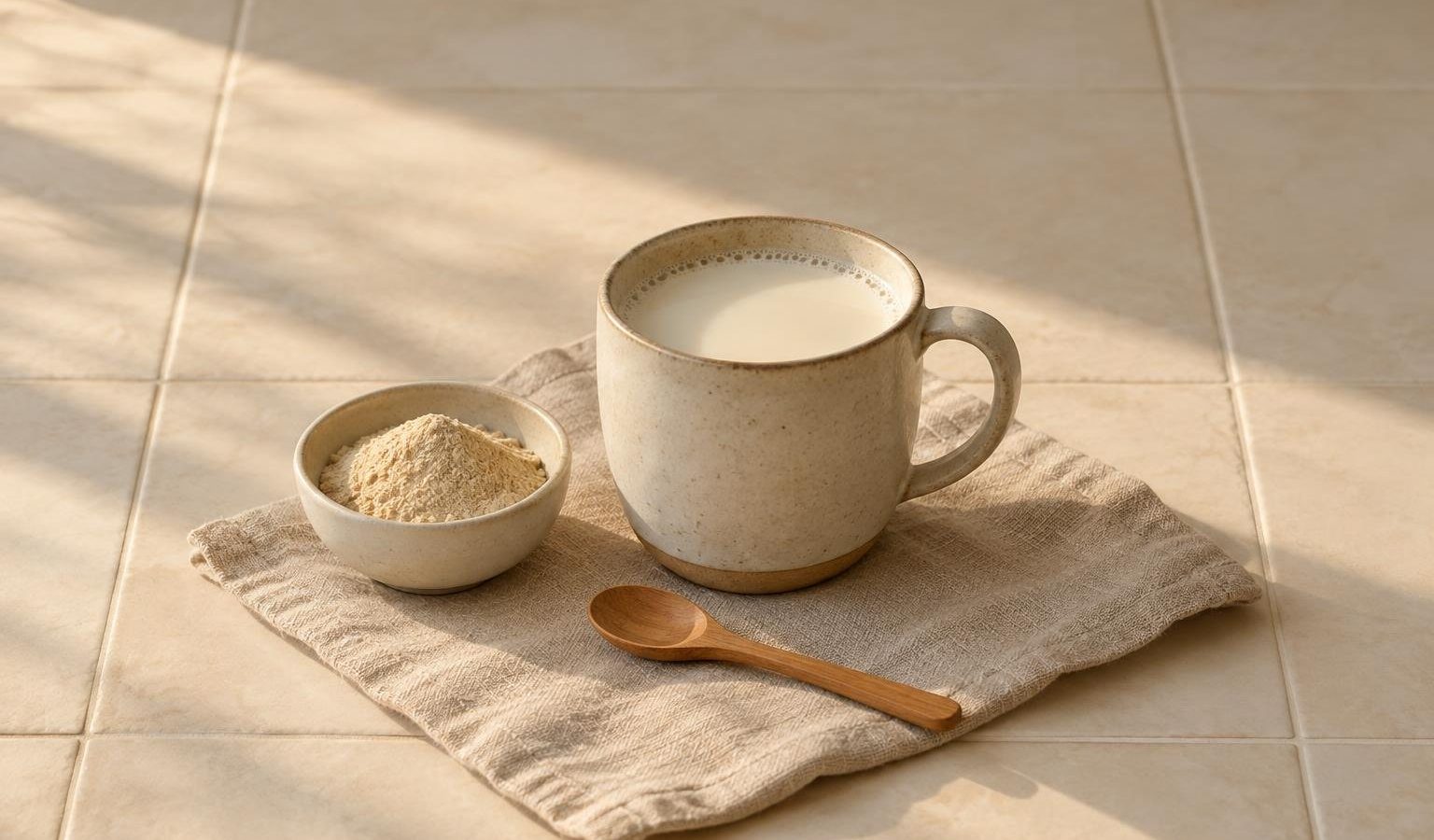
Milk is a gentle base. Its fat softens the bitterness and carries the powder more evenly than water. Dairy and plant milks such as oat or almond both work, though thinner plant milks may show more sediment.
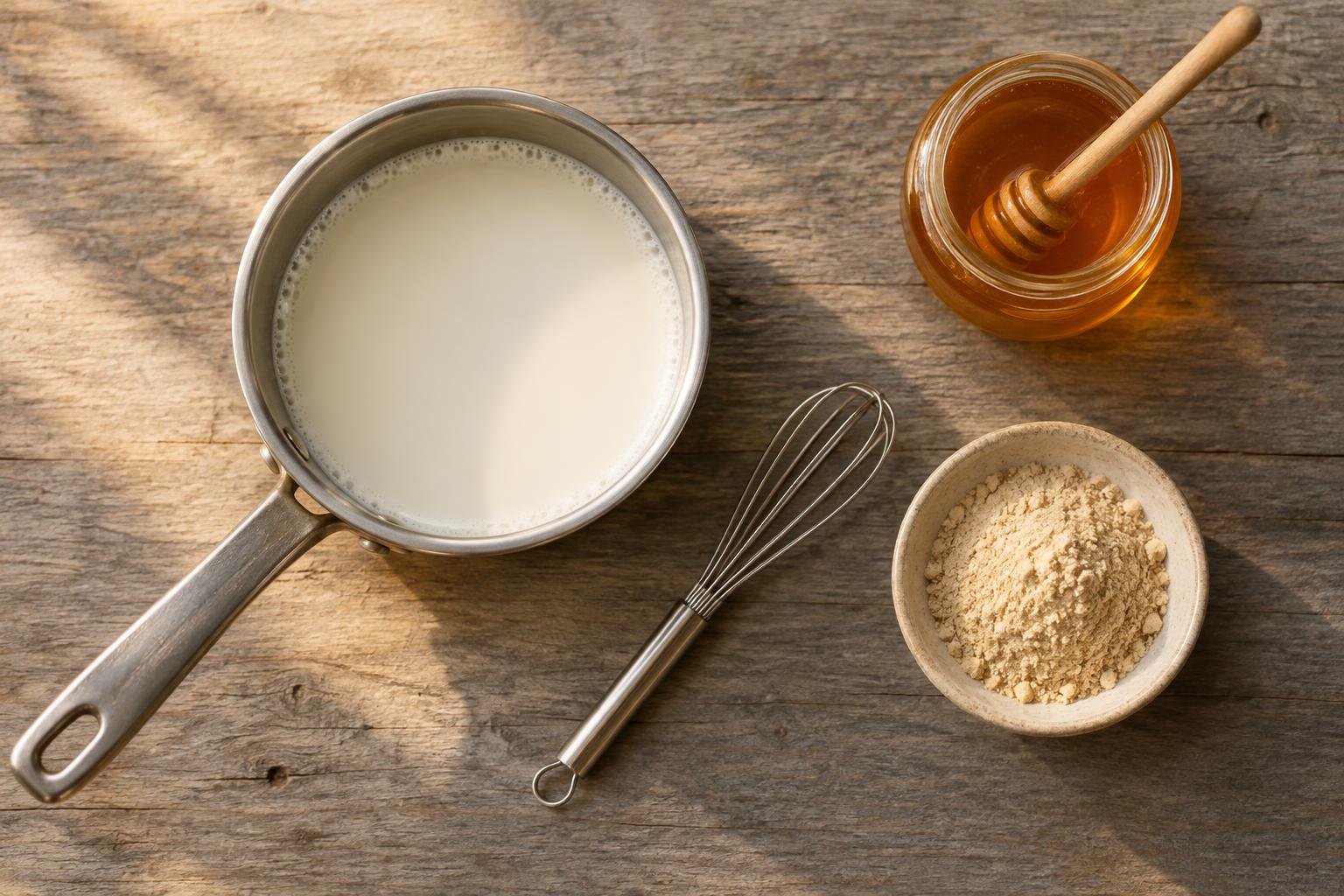
- Pour milk into a small saucepan and warm it over low heat until steaming. Do not let it boil hard, because milk can scorch and form a skin.
- Put the powder in a mug, using the amount on your product label. Add a splash of the warm milk and stir to a paste.
- Pour in the rest of the milk while whisking until the drink looks even.
- Sweeten with honey or a drop of vanilla, if you like.
In a smoothie
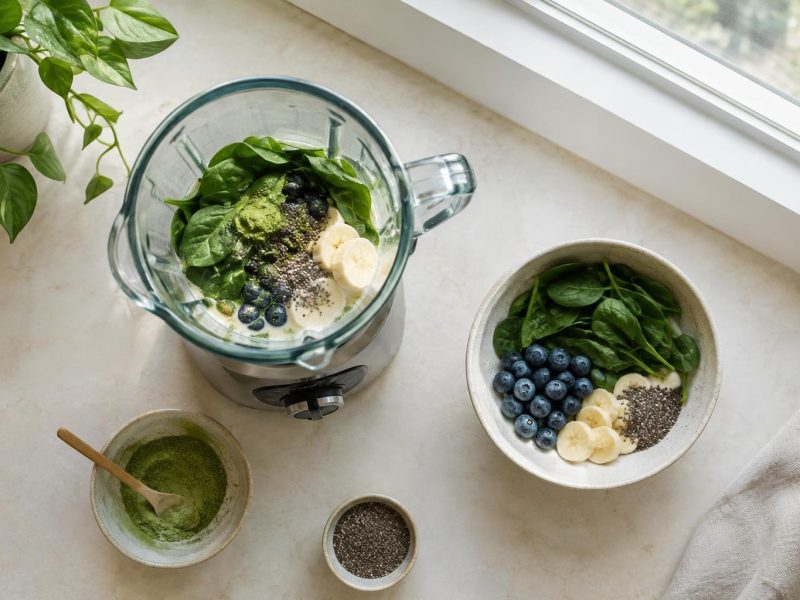
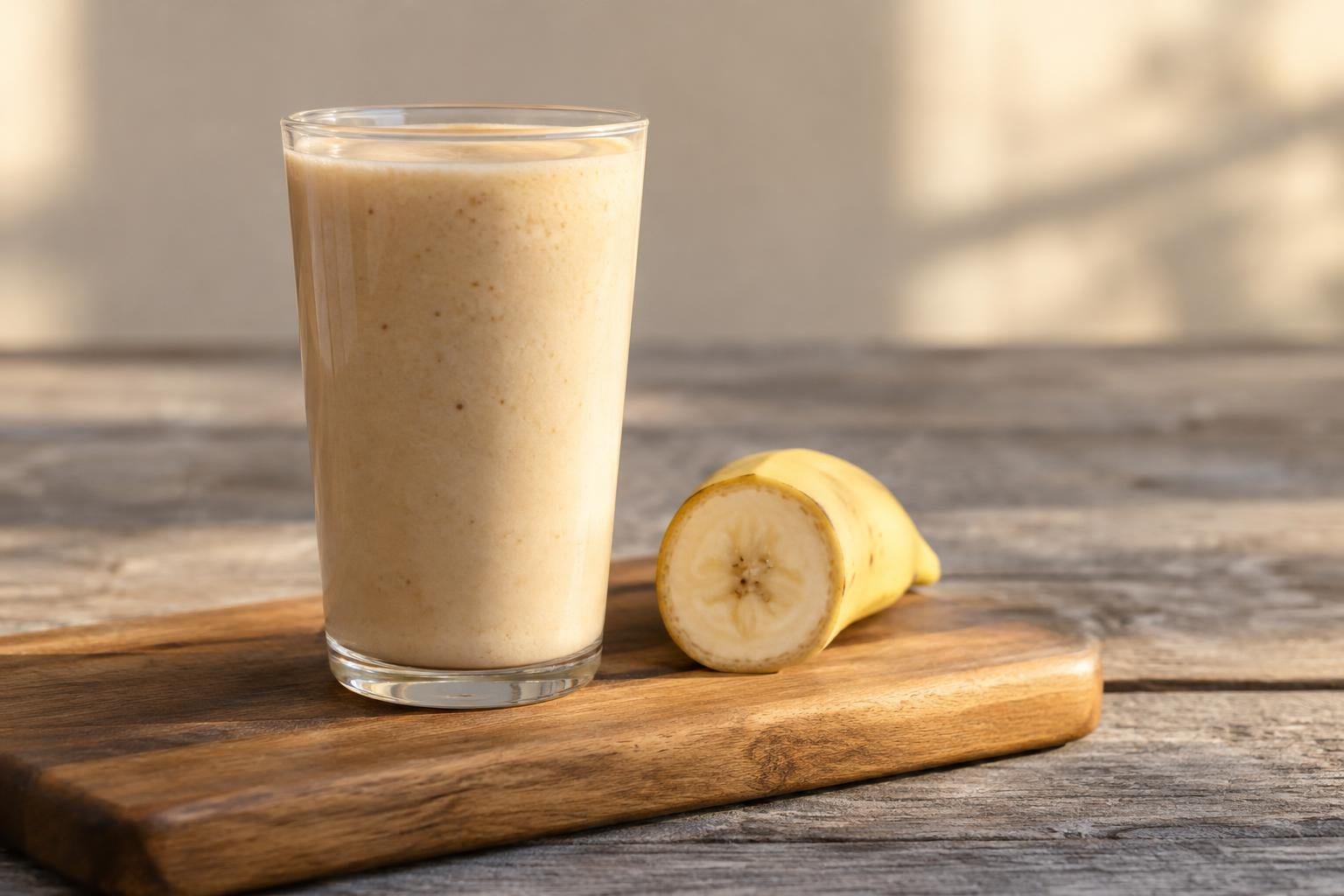
A blender breaks up the powder and greatly reduces clumping. Strong flavors hide the earthy taste, and ripe banana is a good choice.
Simple banana smoothie
- 1 ripe banana, sliced
- Cold milk of your choice
- Ice cubes
- Honey, optional
- Ashwagandha powder, in the amount listed on the product label
Add the milk first, then the banana, honey and ice, and sprinkle the powder on top. Blend until smooth with no streaks. Stir again before drinking, since the powder settles over time. If you enjoy sea moss in smoothies, our sea moss smoothie ideas show other blending approaches.
Safety, Side Effects and Interactions
Mixing the powder into a drink does not change the safety questions that come with ashwagandha. Safety data is limited, especially for long-term use. Ashwagandha may be safe in the short term, but there is not enough information to reach conclusions about its long-term safety (NCCIH).
Possible side effects
Some people may get drowsiness, stomach upset, diarrhea or vomiting. Rare cases of liver injury have been linked to ashwagandha supplements. Nausea, headache and stomach irritation are also possible side effects (Memorial Sloan Kettering). Case reports have linked ashwagandha supplements to thyroid overactivity (thyrotoxicosis), and pills containing high amounts of lead have been reported. This is one reason product quality matters. If you feel unwell after using it, speak with a doctor or pharmacist.
Who should avoid it
- Pregnancy: ashwagandha should be avoided during pregnancy, and it may increase the risk of miscarriage.
- Breastfeeding: it should not be used while breastfeeding.
- Surgery: it is not recommended for people who are about to have surgery.
- Autoimmune or thyroid conditions: it is not recommended for people with these disorders.
- Hormone-sensitive prostate cancer: because ashwagandha may increase testosterone levels, people with this condition should avoid it.
Medication interactions
Ashwagandha might interact with medicines for diabetes and high blood pressure, immunosuppressants, sedatives, anti-seizure medicines and thyroid hormone medicines. It may also add to the drowsiness caused by some prescription medicines. Green tea can also interact with certain medicines, including some blood pressure, cholesterol and osteoporosis medicines, so tell your doctor or pharmacist about everything you drink or take, including the tea base for your drink (NCCIH).
Always follow the label on your product, and talk with a doctor or pharmacist before using ashwagandha, especially if you have a health condition or take any medicine.
FAQ
Can you put ashwagandha powder in tea?
Yes, you can stir ashwagandha powder into tea. Ashwagandha is generally considered safe in food and tea (Memorial Sloan Kettering). Make a paste with a splash of tea first, then add the rest to avoid lumps. Follow your product label for how much powder to use, and ask a doctor or pharmacist if you are unsure. If you take any medicine or have a health condition, check with them first.
What does ashwagandha powder taste like in a drink?
It tastes earthy and bitter, with a slightly sharp, woody edge that is stronger in plain water or tea than in milk or a smoothie. Milk, banana and a little honey soften it. Some people also find the smell strong. Root powders often taste more earthy, while leaf powders can taste greener, though this varies by product.
Does ashwagandha powder dissolve in hot water?
Not completely. The powder disperses and clouds the water, but fine particles stay suspended and settle at the bottom. Making a paste first, whisking well and stirring again before the last sips gives the smoothest result. Hot water does not make it fully dissolve. Straining through a fine strainer removes any grit if you prefer a clearer cup.
Bottom Line
For a smooth drink, make a paste first, then whisk the powder into warm tea or milk, or blend it into a smoothie. Strong flavors like banana and honey help with the earthy, bitter taste. Ashwagandha has real safety limits: it should be avoided in pregnancy and while breastfeeding, and people who take medicines or have thyroid, autoimmune or other health conditions should check with a doctor or pharmacist first (NCCIH). Follow the product label and ask a doctor or pharmacist how much to use.