Knowing where to buy sea moss starts with stores and sellers that clearly name the species, the origin, the growing method and every ingredient in the product. Sea moss is sold dried, as a gel, as a powder and in capsules or gummies, so decide which form you want before you shop. Sea moss is a seaweed, and certain edible seaweeds are excellent sources of iodine (Linus Pauling Institute), so read the label closely and talk with a health professional if you have thyroid concerns.
Types of Sea Moss You Will See for Sale
Shops use the name “sea moss” for several forms. The form you choose changes what you need to check on the label.
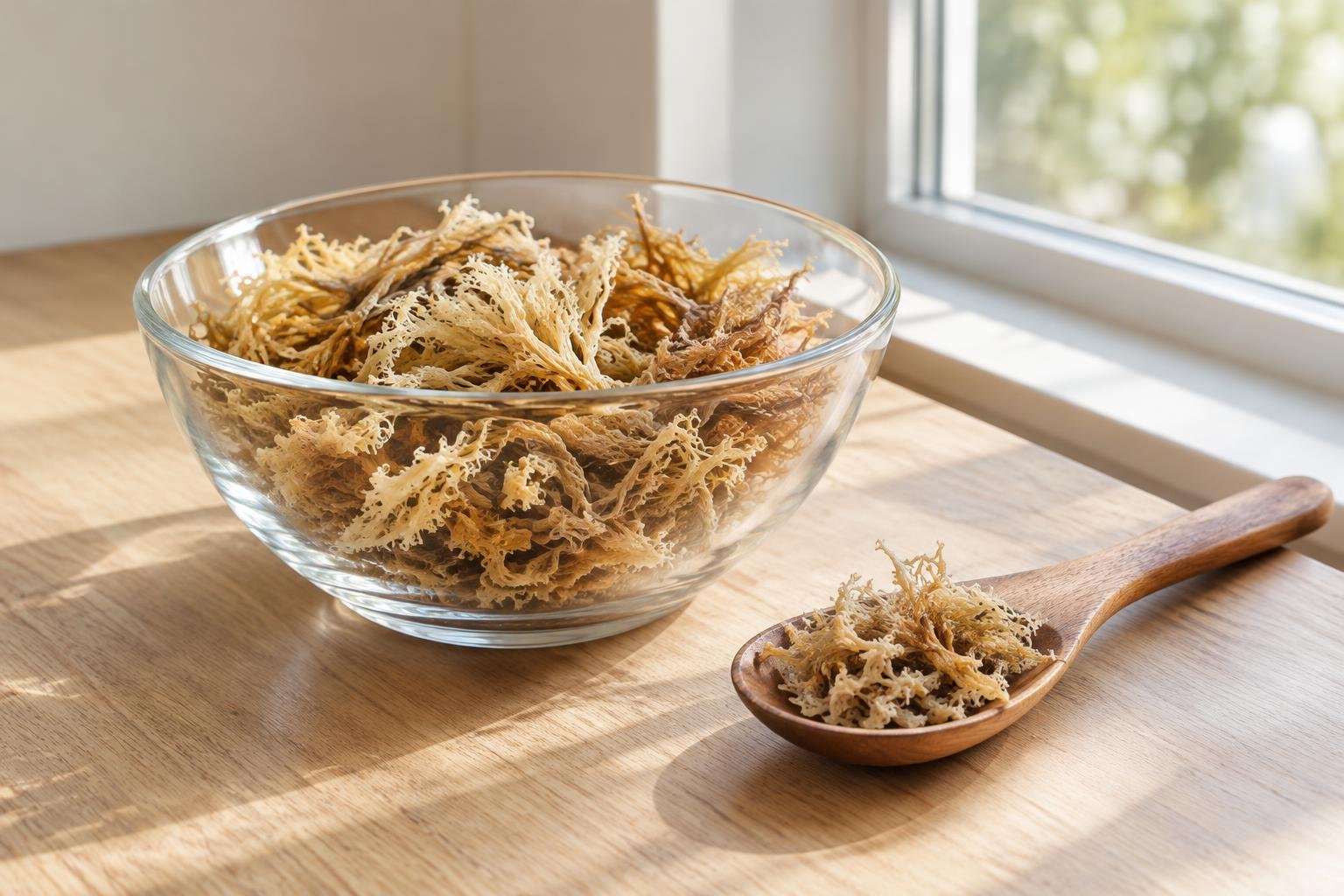
Raw dried sea moss
This is the least processed form. It is sold as dried strands or pieces, usually with some natural salt or sand residue. You rinse and soak it before use, so it takes more work. The ingredient list should be one item: the seaweed itself. Our guide on how to make sea moss gel, with steps, storage and safety shows what that preparation involves.
Ready-made gel
Gel is convenient but perishable. Check whether it is refrigerated, what the seller says about shelf life, and whether anything else was added, such as fruit, sweeteners or preservatives. Ready-made gel can also be harder to judge by eye than dried pieces.
Powder
Powder mixes easily into drinks and food, but it is harder to inspect. Because you cannot see the original seaweed, the seller’s information on species and origin matters more.
Capsules and gummies
These are sold as supplements. Many are blends, so read the full ingredient list for other seaweeds or added vitamins and minerals. Seaweed such as kelp is a rich source of iodine (MedlinePlus), so a blend can add to your iodine intake in ways a single-ingredient product might not. For a closer look at one format, see sea moss gummies: contents, iodine and labels.
Wildcrafted vs. Pool-Grown Sea Moss
These two terms describe how the seaweed was grown, and sellers use them heavily in marketing.
- Wildcrafted usually means the seaweed was gathered from natural ocean waters where it grew on its own.
- Pool-grown usually means it was farmed in tanks, ponds or controlled pools, often on land.
Neither term is a guarantee of quality. Sellers often claim wildcrafted sea moss is more nutritious or purer. Treat such claims as marketing rather than proven fact, and look for details you can check instead.
A better approach is to look at how openly the seller explains the method. A trustworthy seller can tell you where the seaweed was harvested or grown, which species it is, and how it was dried and handled afterward. Vague phrases such as “ocean-fresh” or “premium” tell you nothing.
Quality and Sourcing Signals to Look For
Because most quality claims cannot be checked at home, focus on information the seller can show you.
- The species is named. “Sea moss” is a common name, not a single species, so a precise name is a good sign.
- Country or region of origin is listed. A specific harvest or farm location is more useful than “imported.”
- Growing method is stated. It should say wildcrafted or pool-grown, with some explanation.
- The ingredient list is short and complete. For raw sea moss it should be one ingredient. For gel, powder or gummies, every additive should be listed.
- Storage and shelf-life information is clear. This matters most for gel, which spoils more easily than dried pieces.
- Contact details and batch information are available. A seller who can answer questions about a batch is easier to trust.
- Dried pieces look and smell clean. Expect a mild ocean smell. A strong sour or musty odor, visible mold or damp, sticky packaging is a reason to return it.
If a label lists no iodine information, you cannot tell how much iodine a serving contains. Iodine is the main thing to ask about, since seafood and certain edible seaweeds are excellent dietary sources (Linus Pauling Institute). Most people also get iodine from iodized salt, seafood and dairy products, so sea moss is only one part of the picture (MedlinePlus). Do not assume a natural product has a small or fixed amount.
Red Flags When Buying Sea Moss
Walk away, or at least ask more questions, when you see any of these:
- Disease claims. Any product that says it cures, treats or prevents a condition is making a claim that cannot be backed up. A swollen thyroid (goiter), for example, can have many different causes, from overactive or underactive thyroid to nodules, inflammation or immune conditions, and doctors usually need tests to find the cause (NHS). No seaweed product replaces that evaluation.
- No species, origin or growing method. If the seller cannot or will not say, that is a problem.
- “Superfood” or “92 minerals” style claims with no data to back them up.
- Unlabeled blends. A product that lists “proprietary blend” or leaves out ingredients makes it impossible to know what you are getting.
- Gel with no storage information, or gel kept warm on a shelf with no explanation.
- Strong smell, mold or damp packaging on dried sea moss.
- Pressure tactics, such as countdown timers, “only 3 left” banners or invented reviews.
- Claims that a product is safe at any amount. Safety data on sea moss is limited, so a claim like this should be treated with caution. Follow the product label and ask a doctor or pharmacist.
Where to Buy Sea Moss
You can find sea moss in several places. Each has trade-offs.
- Health food and natural grocery stores. You can see packaging in person, check the ingredient list and ask staff questions. Selection may be limited.
- Specialty and international grocery stores. These often carry dried seaweed in plain packaging. Check that the species and origin are named.
- Online marketplaces. These offer the widest choice but the most variation in seller quality. Look for full product pages, clear return policies and ways to contact the seller. Be careful with reviews, since they can be unreliable.
- Direct-from-seller websites. These can offer more detail about sourcing, but the same rules apply: ask for species, origin and ingredients in writing.
- Pharmacies or supplement retailers. These are more likely to stock capsules and gummies. Check the full supplement facts panel.
If you plan to use it in drinks, you may also like how sea moss drinks are made, with iodine facts.
Safety, Side Effects and Interactions
Safety data on sea moss itself is limited, so the main safety issue to understand is iodine. Iodine is a key part of thyroid hormones, which are needed for normal growth, neurological development and metabolism (Linus Pauling Institute). Too little iodine can cause problems, and so can too much.
- Too much iodine. In adults who get enough iodine, long-term intake above the tolerable upper intake level of 1,100 micrograms per day may increase the risk of thyroid disorders, including iodine-induced goiter and hypothyroidism. That figure covers iodine from all sources. Safety data on sea moss itself is limited, so it should not be read as a safe amount for sea moss.
- Sudden increases. In iodine-deficient populations, a rapid rise in iodine intake may trigger iodine-induced hyperthyroidism. The risk is especially high in older people with multinodular goiter.
- Medication interactions. Taking high doses of iodine together with anti-thyroid medicines can have an additive effect and could cause hypothyroidism (MedlinePlus). If you take thyroid medication, ask your doctor or pharmacist before using any seaweed product.
- Pregnancy and breastfeeding. Iodine needs are higher during these stages, with a recommended intake of 220 micrograms per day in pregnancy and 290 micrograms per day while breastfeeding, compared with 150 for other adults. Low iodine during pregnancy can affect the mother’s thyroid and the baby’s brain development. Safety data on sea moss itself is limited, so talk with your health care provider before using it.
- Children. Recommended iodine intakes are lower for children and vary by age. Safety data on sea moss for children is limited, so ask a pediatrician first.
- Existing thyroid conditions. If you have a thyroid condition or a goiter, check with your doctor before using sea moss.
- Warning signs. A new lump or swelling at the front of the neck should be checked by a doctor. Trouble breathing or a wheezing sound when you breathe needs urgent care, so call 999 (UK) or your local emergency number (NHS).
Always follow the product label for any serving information, and ask a doctor or pharmacist whether sea moss suits you.
FAQ
Is wildcrafted sea moss better than pool-grown?
Not necessarily. Wildcrafted usually means gathered from the ocean and pool-grown means farmed. Neither term guarantees quality or safety, so choose based on how clearly the seller documents species, origin and handling.
Does sea moss contain iodine?
Sea moss is an edible seaweed, and certain edible seaweeds are excellent sources of iodine (Linus Pauling Institute). The amount in a specific product is often not stated, which is why you should ask the seller and check with a health professional if you have thyroid concerns.
Is gel or dried sea moss the better buy?
The better buy depends on what you need. Dried pieces have the simplest ingredient list but need preparation. Gel is convenient but more perishable, so check storage information and added ingredients.
Can sea moss replace medical care for thyroid problems?
No. Goiter and other thyroid problems have many possible causes and usually need tests to find out what is going on (NHS). See a doctor rather than trying to manage symptoms with a seaweed product.
Bottom Line
Where you buy sea moss matters less than how much the seller tells you. Look for a named species, a stated origin, a clear growing method, a short ingredient list and sensible storage information. Be wary of disease claims, vague marketing and blends that hide what is inside. Because iodine can be a concern at both low and high intakes (Linus Pauling Institute), check with your doctor or pharmacist before using sea moss, especially if you are pregnant, breastfeeding, have a thyroid condition or take medication.