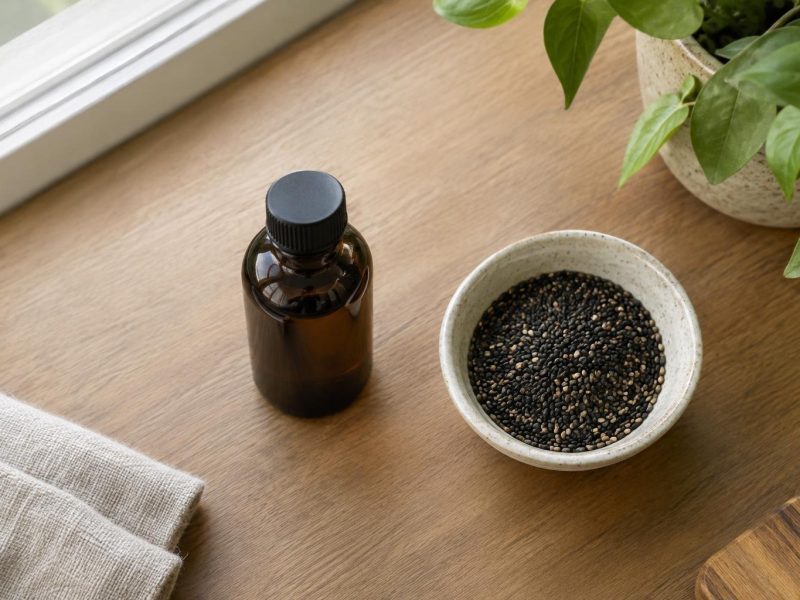
Oil of oregano with black seed oil is a pairing found in some blends and capsules. The published research that names these plants looks at each one as a dietary plant, not as a combined oil, and it calls for more work to confirm safety and efficacy (PubMed). This guide explains why the two are paired, what is known, what is not, and what to ask before you buy.
What Are Oil of Oregano and Black Seed Oil?
Oil of oregano comes from the oregano plant, which research reviews list by its Latin name, Origanum vulgare. Black seed oil comes from Nigella sativa, also called black cumin (PubMed). Both plants appear in the same published review of dietary plants, which covered them as food-based plants rather than as concentrated oil products.
That difference matters. A plant eaten as food and a concentrated oil sold in a bottle or capsule are not the same thing, and findings about one do not automatically apply to the other.
Why These Two Oils Are Combined in Products
Research has not shown that these two oils work better together. The pairing appears to be a product choice rather than a tested combination. In the European Union, botanical supplements are typically labeled as natural foods, and a variety of claims are made about their possible health benefits (EFSA). A blend of two well-known plant oils can be sold under that kind of ‘natural’ label.
A blend is not proof of added benefit
Putting two ingredients in one bottle does not mean the mix has been tested. The review that names both plants discusses each separately among many other dietary plants, and it does not test oregano oil and black seed oil together (PubMed). When a label implies a special effect from the combination, treat that as a marketing message, not an established finding.
Traditional Use vs. Scientific Evidence
What traditional use tells us
Traditional use describes how people have used a plant over time. It can point researchers toward plants worth studying, but it cannot show that a plant works or that it is safe for everyone. EFSA makes a related point: most botanical products have a long history of use in Europe, yet concerns remain about their safety and quality (EFSA). Folk claims about these two oils vary widely and are hard to verify, so they are not repeated here.
What scientific evidence tells us
Scientific evidence comes from studies in cells and animals (preclinical work) and in people (clinical work). The 2018 review discussed below covers both kinds for a range of dietary plants, and its authors say that further investigations are required to confirm safety and efficacy (PubMed). That is a cautious conclusion, and it is a sensible way to read the evidence for these oils.
What Studies Have and Have Not Shown
The main published review that names both plants is about kidney stones. It surveyed dietary plants for the prevention and management of kidney stones, and it listed black cumin (Nigella sativa) and oregano (Origanum vulgare) among plants that have received considerable interest based on scientific evidence (PubMed). Other plants on that list include green tea, parsley, pomegranate and stinging nettle.
The review describes several mechanisms that may be involved across these plants, including diuretic, antispasmodic and antioxidant activity, as well as an inhibitory effect on the clumping and growth of crystals. Its authors describe the role of dietary plants as promising, but they also say more investigation is needed.
How to read these findings
- It is a review of dietary plants. It does not test oregano oil or black seed oil supplements.
- It does not test the two together. Each plant is one entry on a long list.
- It does not show that either oil prevents or treats kidney stones. The authors call for more research on safety and efficacy.
- It does not give guidance on amounts or use. Readers should not treat it as advice for any health condition.
In short, evidence for these oils, alone or in combination, is limited. Anyone with a kidney condition or a history of kidney stones should talk with a doctor instead of relying on a supplement.
Safety, Side Effects and Interactions
Side effects
The research reviewed here does not detail specific side effects for oregano oil or black seed oil. That is a lack of information, not proof that the oils are free of side effects. Because concentrated oils differ from foods, caution makes sense. If you notice an unwanted reaction after using any product, stop using it and contact a healthcare professional.
Drug interactions
Reliable interaction data for these oils is limited, so it is not possible to say they are safe alongside any particular medicine. If you take prescription or over-the-counter medicines, ask a pharmacist or doctor before adding a new supplement.
Who should be extra careful
Safety information for these oils is thin, so these groups should speak with a doctor or pharmacist before using any product that contains them:
- People who are pregnant or breastfeeding
- Parents considering a product for a child
- People with chronic health conditions, including kidney problems
- Anyone taking medications
- Anyone planning surgery or a medical procedure
Quality and regulation
Quality is a real concern with herbal products. EFSA lists the risk of chemical or microbiological contamination and the need to keep concentrations of active substances within safe limits among the issues for botanical supplements (EFSA). In the EU there is no centralized authorization procedure for botanicals used in food. Authorization and monitoring are national responsibilities, and business operators carry the main legal responsibility for the safety of what they sell. Rules differ by country, so a product being on a shelf is not a guarantee of tested safety or effectiveness.
How to Read a Product Label
You cannot judge quality from a bottle’s front, but the back label can help. Look for the following:
- A full ingredient list that names each plant, ideally with its Latin name
- Clear information on the other ingredients in the product
- A lot number, an expiry date and storage instructions
- Manufacturer contact details
- Directions on the label, which you should follow, together with advice from your doctor or pharmacist
Be wary of labels that promise to cure, treat or prevent a disease. Such claims are not supported by the research discussed here. For more on judging a supplement, see this guide to choosing an herbal gummy, and for an example of a safety-focused herb guide, read about ashwagandha tea and its safety facts. Store oils as the label directs, usually away from heat and light.
FAQ
Is oil of oregano with black seed oil proven to work?
No. The research that names these plants looks at them individually as dietary plants and says more work is needed to confirm safety and efficacy (PubMed). The combination has not been shown to do anything special.
Can I use it with my medications?
That is a question for your pharmacist or doctor. Reliable interaction information for these oils is limited, so it is not possible to call the combination safe with any specific medicine.
Is it safe during pregnancy or for children?
Safety information for these groups is lacking, so the careful approach is to ask a healthcare professional before using any product with these oils.
Are the oils the same as the herbs in my kitchen?
Not exactly. Culinary oregano and black seed are food ingredients, while oils are concentrated products. Findings about the plants as dietary ingredients do not automatically apply to the oils.
Bottom Line
Oil of oregano with black seed oil is a popular pairing, but the combination itself has not been tested. Both plants have drawn research interest, yet the main review is about dietary plants and kidney stones, not these oils, and it calls for further study (PubMed). Quality is a concern, interaction data is limited, and people who are pregnant, breastfeeding, giving a product to a child, managing a health condition or taking medicine should check with a doctor or pharmacist first. Always follow the product label.